

An Inspired Testimony
How God reconciled a marriage (long version)

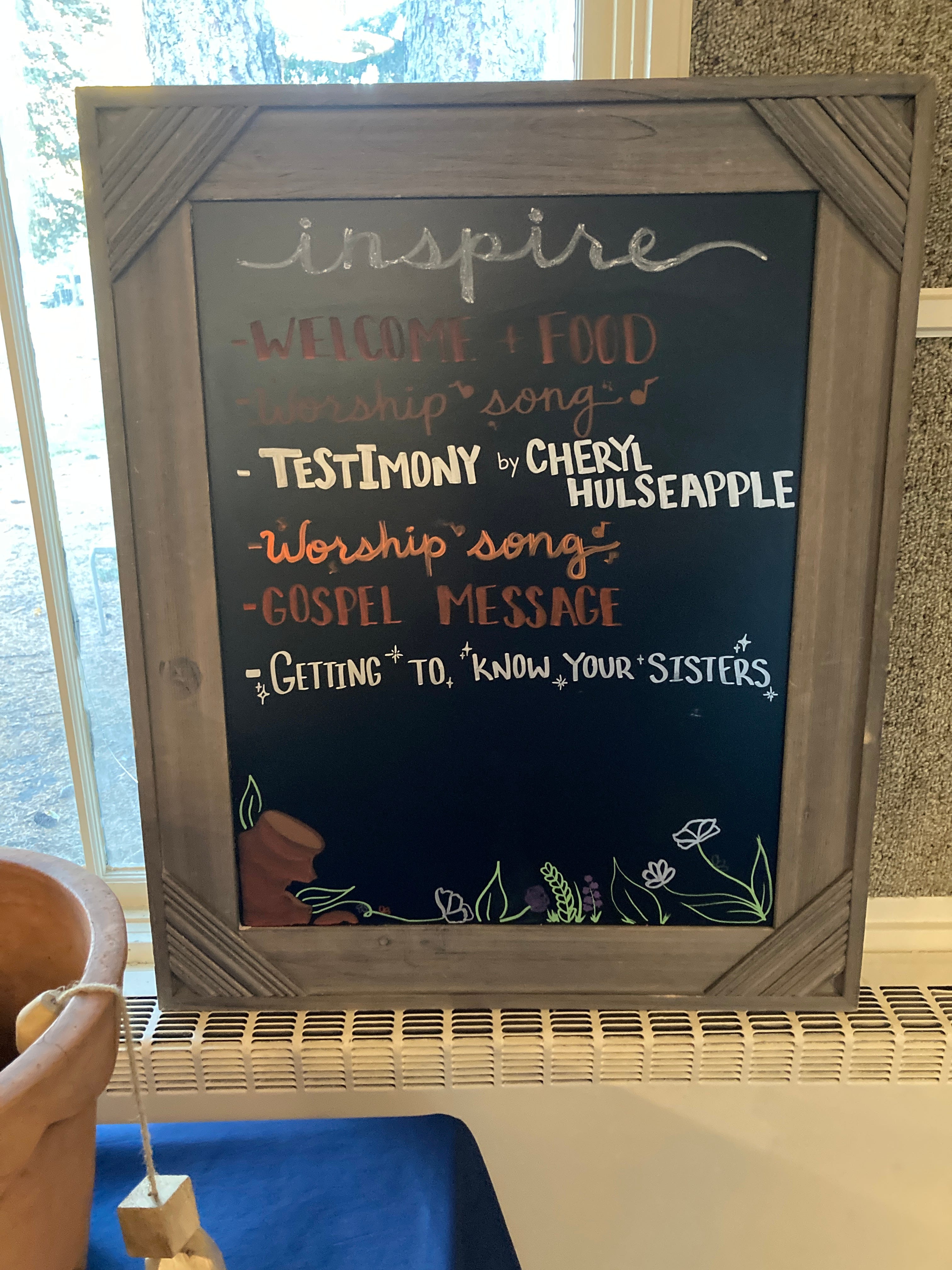
I gave the following testimony at my church on November 2, 2024, for our annual women’s event called Inspire.
I might tell it differently now, and there is always more of the story to tell, but—with minor edits and with added subtitles—this is how I told it then.
I publish it here for the benefit of women who missed it, and for those who have said it was helpful to them and that it could help others.
Perhaps it will help you.
This story is long. Pastor Anthony said I can go as long as he preaches. I don’t usually speak in front of crowds, but I want to share my story with you, my family in Christ, in hopes that it might be helpful to some of you.
I’m going to tell you about how God reconciled my marriage. He brought together two broken people who built a life in vain without Him. Scott and I became lost to each other and were separated for more than 12 years. Through God’s grace, He led us both to Jesus and back to each other again, and He showed us how to love each other in Christ.
Forgiving my father
I was estranged from my entire family for 12 years, as well as from Scott. I lost my father last year. The last time I saw him alive, Scott and I stood at his bedside, and I prayed. I thanked God for blessing us, but my father stopped me and said no, God hadn’t blessed us.
I had been thanking God out loud for everything He had done for us. He reconciled me to Scott, to my entire family, and to Dad before it was too late. Scott and I stood together as husband and wife. Our two daughters, my father’s only grandchildren, came with us to say goodbye. By many miracles and works of God, we were all able to see Dad as a united family in his last hours.
After I reconciled with my father in 2021, God gave us two years together in mutual forgiveness. Dad had been an atheist for most of his life. When I didn’t get the love from my father or from God that I wanted, I hated them both for most of my life. My father explored Jesus in his final years, but I won’t know for sure whether he gave his life to Christ until I get to heaven.
My estrangement from my dad hurt him more than I knew. We had never been close. He tried for a while to reach out to me when I left the family. At the time, I found our conversations to be more upsetting than settling. And I definitely didn’t want to hear his confessions about the parenting choices he regretted. He couldn’t go back and change anything, and I saw no point in hearing about his feelings of guilt. It took my own turning to Jesus for me to stop wanting more than my father gave.
Once I came to Christ and gave all of my burdens over to the Lord, my heart broke to see my father burdened by the past. I lost more than a decade of Dad’s healthy years that I could have spent with him as his loving daughter, if I had known the peace of Christ.
In my father’s 70s, he became humbler and gentler. In the time we had left together, he worked to set things right with me by bringing up many of the subjects we used to avoid. When I told Dad I had given my life to Jesus and that’s why I had returned to my family, he said he thought it was wonderful.
Like Dad, I had also grown and changed. In the years of separation, Jesus let me walk through many tribulations of my own making: I left my husband, my family, and, to a large extent, my children. I committed many of the same sins my parents had, and worse—until I came to the end of myself at the age of 51 and called on the Lord, who revealed to me that my parents and I were equally sinners.
My parents’ marriage
My mother and grandmother used to tell stories about how I spoke in complete sentences at 18 months old. My mother said I stopped talking at age four. I remember choosing to go silent. I gave up attempting to talk to my parents when my father, especially, punished me for crying, or for simply being a child. I remember hoping someone would notice something was wrong and come to me and ask me to tell them about it. No one ever did, and silence became a habit that defined me.
My parents conceived me in 1968 when they were in college. Abortion was still illegal in New York, but it had been legalized in England, and that was where my father wanted my mother to go to get an abortion. Instead, he decided to “give her a chance,” in her words.
They married in December when my mother was six months pregnant. They were supposed to have three months to get used to married life and to prepare for my arrival. But three weeks after the wedding, my mother fell on a patch of ice and went into labor. I was born two days later, two months premature.
I spent my first two months in an incubator. My parents visited me daily, but they weren’t allowed to hold me. They could only observe me through the nursery window. (Hospitals didn’t all have NICUs in those days.) In the eight weeks it took me to grow big enough to go home, my mother didn’t bond with me.
While my father returned to his studies and to his friends, my mother had to quit hers. My father left her and me alone each day in the apartment. We lived several hours from either side of the family, so my parents had no help, and church wasn’t a part of our lives.
When my father graduated, we moved to a trailer park owned by my grandfather. My father eventually got a good engineering job. My parents were able to buy a house, where we lived when I was between the ages of five and seven, until my parents separated.
Soon after we moved into the house, I remember watching my parents fight. I stood in the dining room while they screamed at each other in the kitchen. My mother took a large glass bowl of leftovers from the refrigerator and threw it. I saw it shatter and splatter across the floor. They took no notice of me, and I felt ... invisible.
As I struggled to understand why my parents were fighting, a vision came to me. I saw them sit down at the kitchen table to work things out. Somehow, I knew that’s what grown-ups who loved each other would do. I thought someone somewhere must have the power to make things right.
After I got saved, this became the first event I could look back on and see the presence of Jesus—in this seemingly random picture of peace. I carried this vision with me throughout life. I was determined to find the peace my parents failed to find.
Another spirit also overtook me when I watched my parents fighting—the spirit of contempt. Later, when it came time to make peace in my own marriage, I too failed. Without knowing Jesus, every attempt I made to improve things was rooted in vanity and took peace away.
My parents’ divorce
My father left home for weeks at a time. While he was at work one day, with the help of my grandfather, my mother left my father and took nearly everything they owned. My mother, my younger brother, and I returned to living in my grandfather’s trailer park, and my mother started going to bars and bringing men home who beat her.
Only after my father died did I learn why he lived so sparsely after we left. He never told any of his children or my stepmother what my mother had done when she left, and he refused to talk about it until the end of his life.
When we visited his house after the divorce, we slept on single mattresses on the floor with a few blankets and a wood stove for heat. Despite the scarcity of furniture and other comforts, every weekend with Dad was like a fun sleepover to me. He let my brother and me bring friends, invented and played elaborate games with us, and included us in his many varied hobbies.
My mother focused on dating. She was never without a man for my entire childhood. She married two more times, once to an alcoholic, who allegedly tried to kill her when their nine-month-long marriage ended.
My other stepfather was blind from getting into a car accident while driving home from cheating on his first wife. That marriage also lasted about a year.
When I was ready to find my own husband, I had only two criteria: that he didn’t hit me like my mother let men hit her, and that, unlike my father with me and my brother, my husband would want his children. I had always believed that my mother was the one who wanted us and my father was the one who didn’t.
When I was 12, my father married a woman 10 years younger than him. Watching them raise my three half-siblings became my sole example of stability and normalcy. Dad and my stepmother gave my two half-brothers and my half-sister the love and attention I had always wanted. When I later became a parent, I based many of my own parenting choices on their example.
As a teenager, I was so hungry for love and attention that when boys began to pay attention to me, I felt like I fell into a well of need that had no bottom. I became sexually active at a young age. When I got pregnant at 18, no one tried to convince me of any options besides abortion. My main desire was to please my dad. If I kept my baby, I thought, it would destroy my chances of going to college, and this would disappoint my father.
I knew I didn’t love the father of my baby, and I didn’t want to spend my life with him. He too wanted me to have an abortion so that his future wouldn’t be “ruined.” Neither my parents nor his tried to change our decision.
So, I did the thing my own parents didn’t do, and I aborted my baby. Before the procedure was over I regretted it. I started to cry as I went under the anesthesia, and the tears burst out as soon as I woke up, once I knew I could never go back and undo what I had done.
Over the next few months, I got my driver’s license, started my first job, moved out of my mother’s house and into my first apartment, and started to put myself through college—all at the age of 18.
Even after I took the life of my child, God worked for good in my life. Two professors, the first male authority figures I ever respected, changed the course of my life by giving me a sense of having a writing voice that someone enjoyed and wanted to hear—a sense that I had a voice at all.
I met Scott in1990 in my junior year. I was an English major, he was a geology major, and God brought us together in a foreign language class. The class required us to meet five days a week and talk to each other daily as part of our language lessons. It was otherwise unlikely we would have met, talked, or become friends.
I wasn’t impressed with Scott as more than a friend at first. We were both seeing other people. But after we graduated and were both available, we kept running into each other, which we took as a sign that “the universe” was trying to tell us something.
I was working in a bookstore when Scott, who happened to be working in my town, wandered in one day on his lunch break. I was afraid that we’d run the course of serendipitous opportunities and that he’d leave without asking me out, so I initiated the idea before he walked out the door.
We exchanged phone numbers. It was winter 1992, and Scott was about to start graduate school out West. I didn’t like the idea of having a long-distance relationship or of waiting for him to return to New York, so I suggested I go with him.
We had been seeing each other for four months when we packed our two cars with as much as we could fit, and in April 1993 we drove to Tucson and moved into our first apartment. I was 24 and Scott was 22.
Engagement
The two years we lived in Tucson away from our families were in many ways like a long vacation. While Scott went to graduate school, I worked full-time in a bookstore and found freelance publishing work on the side.
Not long after we had arrived in Tucson, I tested him. I told him I felt depressed and that I feared our relationship would end. Would he leave if he knew the truth of who I was inside? He didn’t.
Again, I couldn’t stand the tension of waiting, so I brought up discussions of getting engaged and shopping for rings. He gave me a ring during a hike in the mountains.
When he had just a couple months left to finish his degree, a friend of mine from the bookstore, who had moved to Las Vegas, invited us to visit. I brought up the possibility of eloping with Scott because, I said, “Why not? We’re getting married anyway.” We decided that if it was easy, we’d do it.
We were married in Vegas on April 15, 1995, at a drive-up window at the Little White Wedding Chapel while we sat in the backseat of my friend’s car—with her in front as our witness. When we returned to Tucson, we bought a large van, which Scott named Beulah. The Lord would one day use this name to reveal His presence with us in those early years.
After Scott graduated, we packed the van with our cat and our belongings and set off for New York to live closer to our families and to start a family of our own. We debated whether to tell anyone we had eloped, but we decided to tell our parents. His mother, especially, was disappointed, and she still calls our first wedding our “McDonald’s wedding.”
In July, we had a second, more formal, ceremony with our families and friends in attendance. Scott’s childhood minister, along with Scott’s father—who later became a minister—performed the service. After the reception, the childhood minister said to us, “I think you two have what it takes,” and that was the sum of our Christian marriage counseling.
We didn’t talk about our religious histories until much, much later, after we were reconciled. I had answered an altar call when I was 12, when one of my stepfathers took our family to church. Scott attended a Presbyterian church with his father and brother while he was growing up, while his sister went to a Catholic church with their mother.
After college, he attended the church of a pastor from his military unit, where he also answered an altar call. No one ever discipled either one of us, and we had both quit seeking the Lord by the time we were married.
As we began married life, we were also getting to know each other’s families. If I had known what God created marriage to be, I might have recognized my willingness to let Scott lead in this area. I had little idea what a strong family was, beyond the example of my father and stepmother, whom I had watched from the sidelines. I secretly hoped that, because Scott was a family man, he would know better than I did.
Married life
I decided I wanted to start a family as soon as possible. This decision was made based on fear. By the time we moved back to New York, I was 26. Even after my traumatic childhood, I never felt disadvantaged simply because I was a woman. But I did believe the worldly lie that if I were truly confident, I’d pursue my own graduate studies when Scott was done with his, which meant I’d go for a career in publishing rather than start a family right away.
Motherhood to me was a cover, I thought, a way to avoid facing my fears of pursuing a career. I never discussed the reasons behind my choices with Scott. I always hid my shame and carried it alone.
Scott quickly got a job, we moved into our first tiny apartment, and I immediately got pregnant. I took a job as an editor for a TV listings company, and we moved north to a bigger and safer apartment. Satan then started to have a field day with my weaknesses.
After our daughter was born I thought to myself, “Now I have to be with this guy for the next 18 years.” I saw an eternity of drudgery as a wife and mother before me. Today I understand that these feelings came from not knowing who I was in Christ, but back then I started to view Scott as the problem.
When our second daughter was born three years later, I was still lost in depression. Whereas my contempt used to be focused on my parents, I now directed it toward my husband. When conflict came up, we only had the worldly tools of manipulation and vying for position. I didn’t know where Scott ended and where I began.
Satan found another way to get to me: through the internet. I couldn’t communicate the turmoil of my thoughts and feelings with Scott, so as the early internet developed, I started to share them online, where I found people who were willing to hear or read them any time of day or night. I thought that my writing voice was my strongest and truest voice.
Satan knew all of the best ways to get to me: through my experiences of being unwanted as a child; through feeling unseen, unheard, and unloved by my parents; and through my dislike of women and my preference for men as friends. These weaknesses came in part from my childhood need to escape my mother and her ever-present boyfriends and from my need for the consistent presence of a strong father. I believed that my preference for male friends was simply “who I was” and that “being myself” could only help me.
Separation
In 2009, when our daughters were 13 and 10, I discovered podcasts. As always, I was looking for answers and for people who had knowledge that could save me from depression and isolation. I obsessed over books and authors, fitness programs, diets, and types of therapy. I even loved tarot cards, not because I believed they held special powers, but because their images gave me evidence that someone knew and understood the forbidden emotions I longed to share. I believed the lie that talking about my feelings would relieve me of the burden of carrying them.
I found a philosophy podcast that focused on the topics of truth and self-knowledge, and I became hooked. I listened to multiple episodes per day and took notes. I became a part of the “philosophy community” and joined Facebook groups, online chats, and Skype calls with them. Before long, I put the pursuit of “self-knowledge” before my husband, who had no interest in such topics, which I took to mean he had no interest in me.
The show’s audience consisted of mostly men, so regular female listeners were given almost celebrity status. Finally, I found the so-called friends and the attention and value I was seeking. I believed that if I became my “true self” I’d then earn “true” friendship and love. These people (men and women) encouraged me to leave my husband, which led straight to emotional infidelity.
The host taught that anyone who didn’t want to know your feelings and didn’t ask about them didn’t love you. Being heard and known in this way, it was believed, would lead to happiness. Many followers of the podcast left their families when they didn’t get the responses they thought they deserved. I was one of them.
The show’s host said we didn’t leave our families, that they left us. Being rejected by them was a gift, he said. It freed us to look for a new and better family that did want to know us.
I moved out of the house and returned each day to care for and homeschool the girls while Scott was at work. I left again when he got home. When the kids became old enough to drive, I started freelance editing again, and later took a job as a full-time onsite editor with a magazine publisher.
I thought I had found a level of happiness. I was doing all of the things I believed I had avoided by marrying Scott: pursuing a career and learning to take care of myself. Now, I thought, I could find a man who would love me for my courage and for my successes and not for my weaknesses.
In 2013, Scott and I legally separated. He quickly found a girlfriend after I left, and I encouraged the relationship in attempt to get his thoughts off me. I didn’t push for divorce until years later, partly because I didn’t want the other woman to pressure Scott for marriage. She was terrible to him and to our children, and I regret that my children had no choice in whether to be around her and live with her, just as I had no choice with the men my mother brought home.
Our older daughter got her first apartment as soon as she was old enough. And Scott’s girlfriend was living in our home with him and our younger daughter in 2020—when I got saved.
Reconciled to Christ
I had already begun to come to the end of myself before the pandemic. I wondered what next thing I could pursue to improve my life. Along with the pursuits I’ve mentioned, I had also tried 12-step groups and working with several therapists and three life coaches, including a hypnosis coach and a dating coach.
The dating coach stopped working with me when she felt wrong about me being married, and I agreed that she was right. Nearly everything I tried to improve my life was leading to dead ends. Panicky thoughts began to set in, but one idol still gave me hope: my job. My editing skills seemed valued and useful there, and I felt intelligent and capable.
I had the opposite experience with men, however. No matter how intelligent I was determined to be in this area, nothing succeeded. Despite my sheer will to find a man who would love me “for myself,” I could no longer deny my string of failures. It was all too much like my mother’s string of men I had longed to escape from in my childhood.
The host of the podcast I followed started to interview Christians. I was becoming disillusioned with him, his teachings, and the fruits of his questionable theories. He taught principles of peace and free will, but, over time, more of his followers fell away, fell apart, and openly mocked each other. Something wasn’t right.
When Christians came on the show, however, the interactions were kind and friendly, even amid disagreements. The ease of these conversations was not lost on the host. Over time his public attitude toward Christians changed from negative to positive.
“Even Christians treat me better,” he said, which he meant as a put-down toward his supposedly more intelligent guests. I began to wonder what Christians had that other people lacked. What was the foundation of the Christians’ consistent kindness?
The lockdowns of 2020 motivated me to seek answers. By then I hadn’t dated in two years, since I had accepted that no good man would date a married woman—of course! And my job was no longer going the way I wanted it to either.
I had told myself when I got the job that I'd never freelance or work at home again. But when weeks of working alone in my one-room apartment turned into months, with no end in sight, I finally had to admit I wasn’t in control.
In an attitude of experiment, I waved a white flag of surrender and said a small, silent prayer to the one I had for so long refused to believe in. I said, “OK, God, what have you got?”
I suddenly had a desire to read the Bible. I wondered why I had read Shakespeare in college but never God’s word. What was this book that so many people throughout history had loved but that literature curriculums were mostly silent on?
Perhaps I could explore the Bible, I thought, and make female friends at the same time. I just needed to find a women’s Bible study that was active online while everything was shut down in person.
I found a study being offered by a church located five minutes from my apartment, and the study was starting the following week. A lovely group of women welcomed me and led me in lessons about the characteristics of God—the perfect study for a beginner.
In the third week, we learned about God’s gifts, which of course included His Son. I was reading in John 19 and in Isaiah about Christ surrendering to the cross when the Lord convicted me: I saw the pure heart of Jesus.
He didn’t manipulate or control His enemies when they sought to kill him. Isaiah 53 says, “He opened not his mouth.” Jesus chose to be meek, when He could have called down the angels to save Himself. He saved humanity instead—he saved me. I was sitting as I read, but my knees mentally buckled.
I had always longed to be seen and known. And suddenly I felt an affinity with the Lord of all creation. I saw that He understood the persecution I had felt as a child for being born and for trying to speak about the chaos that was happening around me, and then ultimately giving up.
I saw that Jesus experienced rejection way beyond anything I had ever experienced, and of course that he had all power, where I had none. From that moment onward, I gave my life to Him.
The Lord’s works
After I got saved, I attended church and read the Bible for six months before the Holy Spirit weighed on my heart that God hates divorce. At that point, Scott and I were on our third attempt at divorce, and we had been waiting for a year to receive papers from the court telling us it was final. The events of 2020 only slowed down the proceedings. Instead, God used the court to send us a message.
Church had resumed meeting in person, and the pastor and his wife wanted to meet with me so we could get to know each other. On the morning of the meeting, I found a letter from the court in my mailbox. It said the divorce case had been thrown out.
Our first two attempts failed because of incorrect or incomplete information. This time, the result was once again the opposite of the one I had been waiting for. At first, I was disappointed at the idea of spending yet more time in marriage limbo. But God: now I was surrendered to Him. Even though I didn’t know exactly what he was doing in the situation, I thanked Him for sending a strong message that He was working in it.
The letter directed the focus of the meeting with the pastor and his wife where I otherwise would have hesitated to go: directly on my broken, 27-year marriage.
In church, I was surrounded for the first time by happily married couples and strong Christian women. I felt like I didn’t belong among them, but I trusted that God had me where He wanted me. I prayed daily that He would bring my marriage to a resolution. At first, I asked for the divorce to go through so that Scott and I could finally “move on with our lives.”
I also prayed, “Whether I am married to Scott or I am free to marry someone else, Lord, help me to become a Christian wife.” I didn’t see any possible way to fix my marriage, since Scott was living with another woman.
God was beginning to warm heart to Scott again, and, over time, I asked God specifically to fix our marriage: “It’s not possible for me to fix what I’ve done, Lord, but I know all things are possible with you. Please make me a Christian wife to Scott, my husband.”
A year after the dating coach had quit working with me, she contacted me with a new idea. I had several sessions left that I had paid for and hadn’t used. “Why don’t I help you write a letter of apology to Scott?” she asked.
She knew I had become a Christian. She herself wasn’t a believer, but she often worked with Christian women because she promoted traditional marriage values, and at the time when I worked with her, I didn’t know any women who valued their role as God designed it.
With the coach’s feedback, I handwrote the letter to Scott and mailed it. In it, I apologized to him for all the things I had done to hurt him and our daughters. I thanked him for being a wonderful and faithful husband to me and a devoted and present father to our children.
A couple weeks later he thanked me by text message. And then I went back to waiting on God.
Call to obedience
I was at work one Friday when a call came in for me. My work didn’t involve customers or clients, so receiving a call from outside the company was highly unusual. I thought it must be bad news, and I was correct.
Scott was on the phone. He had kept in touch with my family while I was estranged from them, and he told me my mother had called. My brother was in the hospital and doctors thought his heart was failing. He was 49.
I thanked Scott for calling me, and we hung up. I understood the call as another message from God, this time telling me, in a way that I couldn’t ignore, that the time had come to reconcile with my family.
I had already been mentally preparing, and I obeyed, nervous but ready to face whatever responses came from them. I hadn’t talked to my mother in more than 10 years. I called her from my office to tell her I would be there for her and for my brother, and I said I was sorry for leaving them. She sounded frantic and relieved at the same time.
The following Sunday after church, I made four difficult phone calls. I called my mother again. I called my father for the first time. And I called my brother in the hospital. Each of them was happy to hear from me and—God is so gracious—they all welcomed me back into the family with joy and without any anger or resentment.
Finally, I called Scott, who was less gracious. I told him I got the letter from the court.
“I’m sorry,” he said. He explained he had been given the wrong advice to use the case number from our separation, and that we needed a new case number.
“Actually, I called about something else.” I paused and said, “I recently came to the Lord, and I no longer want a divorce.”
He swore at me, told me how awful I was, and then he hung up.
I thanked God for giving me the opportunity and the courage to make all of the phone calls, while He calmed my shaking.
I then turned to the task of supporting my family. Since coming to God, I felt grateful for them. No matter what hard times and trials I had gone through with my parents, my siblings, and the rest of my family—I now saw our lives as intertwined gifts from God.
I still felt insecure about how to live in a godly way, so I sought biblical Christian counseling outside the church. I wanted help in making up for decades of walking in ignorance against the Lord. The pastor’s wife ultimately agreed to work with me.
In our first session, she explained to me that Jesus had washed me clean and that I no longer carried the weight of my sins. I was doing what God called me to do: I had repented and given my life to Christ, and He had taken away my guilt and shame.
“You’re right with God,” she said. “It’s Scott who’s in the wrong now.”
This was news to me. I had always seen myself as the one who was wrong, who had betrayed Scott and our children and had left our families. Wasn’t Scott always doing the best he could with the wife he’d been given?
When I left the session, I felt an unfamiliar lightness. The weight of being “wrongly born” was gone. I understood that God had created me, that He had always wanted me, that He had worked in and through the lives of my parents, and that my life and theirs were and always had been blessings from Him.
I saw the truth of my unity in marriage with Scott. Although we were legally separated, we were still wed to each other in God’s eyes. The choices each of us made would always affect the other. God had washed me clean when I turned to him. Could He wash both of us clean? I prayed and waited for God to sort everything out.
In my car, I started the engine to go home. The music app on my phone began to play a song.
“God, I look to you,” the lyrics said. I had just come from a session to get biblical guidance in looking to him. The words continued:
I won’t be overwhelmed.
Give me vision
To see things like you do.
God, I look to you.
You’re where my help comes from.
Give me wisdom.
You know just what to do.
As I listened to the words, I saw another vision. I had recently watched The Passion movie, and as I sat in the car, the scenes of Christ being beaten replayed in my mind. They repeated all the way home while I sobbed.
I understood the enormous weight of the cost Christ had paid to free me of my sins. When I pulled into my parking space, the song ended, but the images continued. Once inside, I couldn’t stop crying for what seemed like an hour.
Then ... I started laughing. I laughed in joy, and I couldn’t stop.
My sin and its penalty had been nailed to the cross, and I had been reborn into God’s family. God knew every minute of my life, all the things I had been through, and everything I had done. He also knew where my life was headed. God had always been “where my help comes from.” It was 2021.
I heard from our girls that Scott and his girlfriend had been off and on for some time, and around Thanksgiving I heard that he told her to leave. I privately thanked God for breaking down another wall, and I waited for the next one to fall. I thought Scott would take time for himself after everything he’d been through between me and the other woman.
But he invited me to his house to celebrate Christmas with our girls. Our interactions on that day were friendly, and I made sure to shine the light of Christ. I said yes when Scott offered coffee, smiled as we talked, and put into practice everything I had learned up to that point about being a godly woman and wife—I submitted, I received, and I smiled.
Reconciled in marriage
Toward the end of January, almost a year to the day after I had called Scott to tell him I no longer wanted a divorce, I received another text message from him.
“Would you like to get together sometime?” he asked. I cried a few tears of joy, thanked God for working a miracle, and I responded, “I’d love to.”
Scott has since said his intention was to be friends. But from the moment we got together over dinner and started talking, Jesus knit our hearts back together.
Scott asked me how I came to be a believer, and I told him my testimony. We talked about what had happened in his life over the previous years, and we caught up on our families and our girls.
He says he saw the differences in me immediately. I had forgiven my family. I was cheerful. And I had given my life to the Lord.
We barely touched our food, and when dinner was over, we both forgot our leftovers on the table. The next morning, Scott texted me to ask when he could see me again.
I told him I was going to a church event the next evening, which was a Sunday, and that he was welcome to come along. He wasn’t unexcited to go to church, especially a Baptist one, but he was willing if it meant we could spend more time together.
So, on our “second second date,” he met my church family at the time, who had been praying along with me for marriage reconciliation—and now Scott sat next to me in our church. As we left that evening, he gave the pastor and the church a slight rejection: “I find God in the mountains,” he said. The joke was on him; the church is located in the mountains.
The following weekend, I went to a women’s conference with a group from the church. On the morning of the conference, I had free time to read the Bible. I was following my daily plan, which was in Isaiah 62, when I read verse 4:
Thou shalt no more be termed Forsaken; neither shall thy land any more be termed Desolate: but thou shalt be called Hephzi–bah, and thy land Beulah: for the LORD delighteth in thee, and thy land shall be married [emphasis added].
The name Beulah startled me out of my morning routine. At this point, I had been saved for a year and a half. I had read the entire Bible once, but in a version other than the King James that didn’t contain the name Beulah. It was like God was speaking directly into my marriage through His word. I cried more tears of joy.
I learned that Beulah meant “married,” and I heard God telling me that He had been there with Scott and me when we were first married and had bought the van we named Beulah. I also heard the Lord say in that He “delighted in me,” and that perhaps my husband would delight in me again too.
Only a few days had gone by since Scott had gone to church with me, and it had only been a week since we had reconnected. I couldn’t know yet what his or God’s intentions were. Was our reconciliation leading to a restored marriage? Or to a friendship? I didn’t yet know whether Scott would be able to trust me again.
Even after God told me my “land shall be married,” I still felt a lot of anxiety at the possibility of being unequally yoked. Scott resisted walking with the Lord. But he continued to pursue me, and this time I let him lead.
I waited for him to ask me to get together, and I let him plan how and when we would see each other. Over the next few months, we dated like a new couple.
My apartment lease ran out, and in June, I moved back into our home, and we began to live as husband and wife again. Letting Scott lead gave me the security I had lacked in our marriage before, when I had controlled each step of how our relationship went.
Our greatest conflict at that time was where we would attend church. We went to several before we found ECBC. I was surprised to learn that Scott was already attending a church on his own. He had met the pastor, the owner of a brewery, and they had become friends over their shared love of beer. I struggled to trust the Lord and to submit to Scott’s headship in this area.
Then Pastor Anthony came to guest preach one Sunday at the Baptist church I thought the Lord was leading us to. Scott was away on business, so I went to church by myself. I liked Anthony’s sermon, and I was especially surprised by his non-condemning nature when I told him afterward about Scott, our marriage and separation, and how anxious I was that Scott wasn’t saved.
In July, Scott and I started going to ECBC. Pastor Anthony soon invited us to his house for dinner to discuss Scott’s issues with giving his life to Christ.
The following Sunday, Anthony preached a sermon on Romans directed specifically at Scott, who responded by accepting Christ as his Lord. Scott was baptized a couple months later, and a year after being saved, he was ordained as a deacon.
In all of these ways, God revealed to me the security I had in my marriage, in my church family, and in Christ.
When we were first dating again, before Scott gave his life to Christ, he told me many times that I brought him peace. If I hadn’t known the Lord, I would have doubted Scott. “This could work,” he said, and “I trust you.” More tears! I saw a masculine confidence in Scott as he decided to reconcile our marriage that I couldn't see in him before my salvation.
Before my dad died, I saw him humbled to become curious about Jesus later in his life. I realize today that God the Father fulfills my needs far more than my earthly father or my husband ever could, and this has freed me to love and forgive.
After the struggles I’ve had, I am now better able to rest in peace and walk in meekness in the role God gave me—following the example of Christ, who was “meek and lowly in heart” when he went to the cross.
I will leave you with this powerful passage of Scripture:
That we henceforth be no more children, tossed to and fro, and carried about with every wind of doctrine, by the sleight of men, and cunning craftiness, whereby they lie in wait to deceive; But speaking the truth in love, may grow up into him in all things, which is the head, even Christ (Eph. 4:14–15).
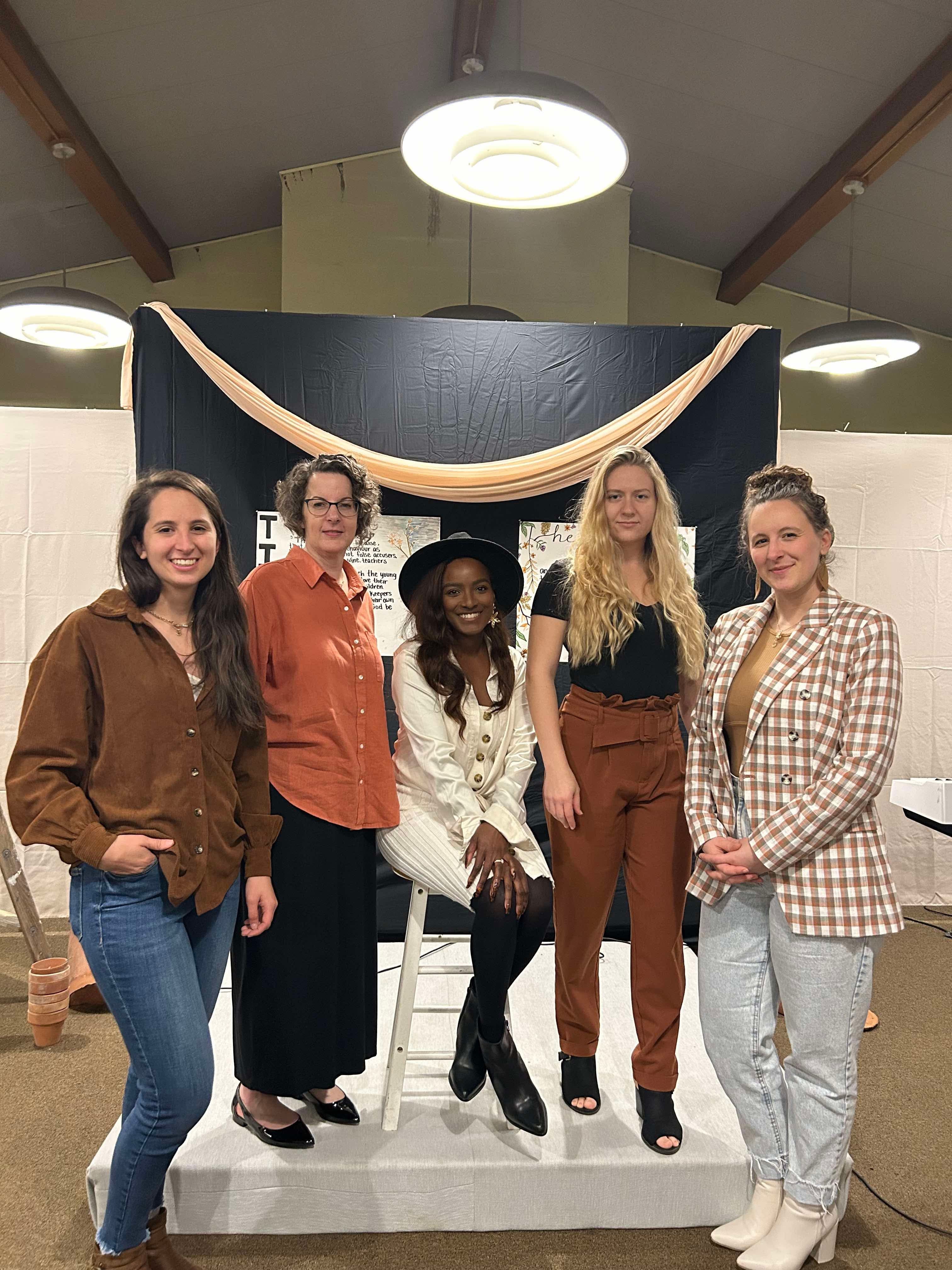
If you know someone who might be helped by my story, please share it with them.